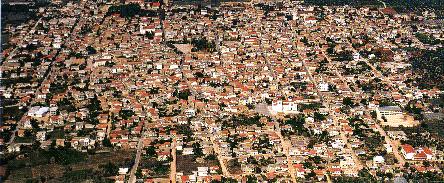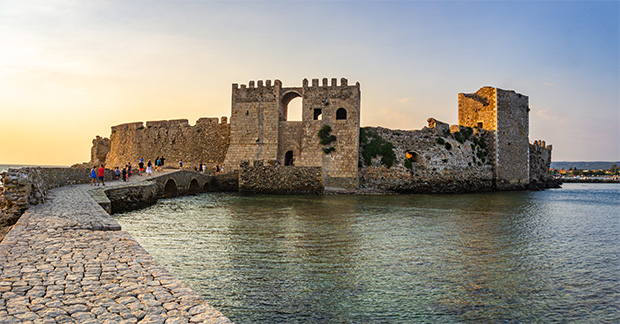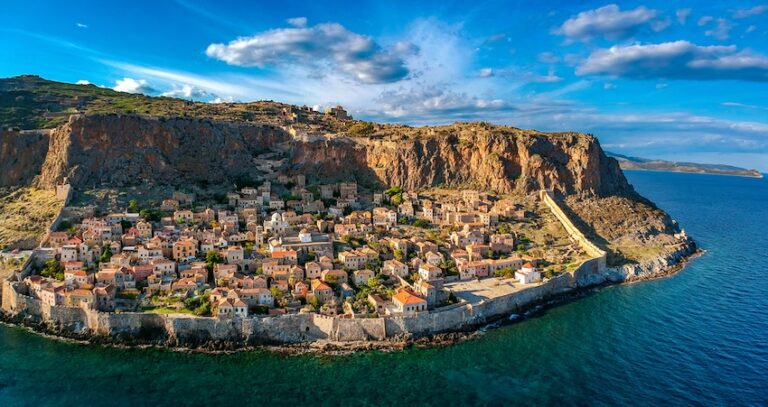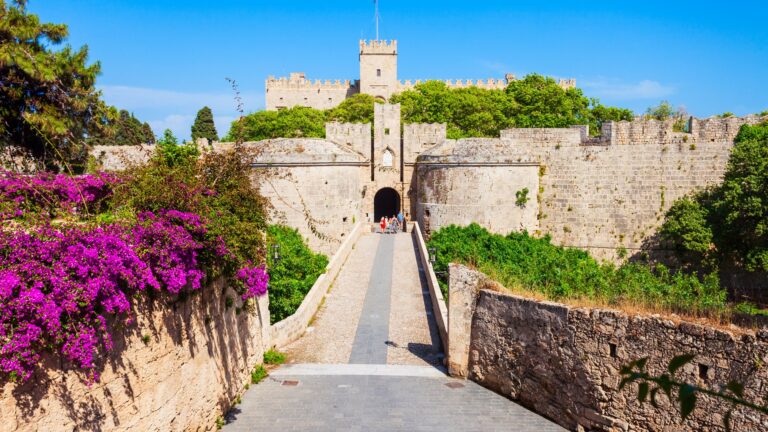
Mani area lies in the Peleponnise penisoula. It is divided in two parts: the Messinian Mani which lies in the Messinia municipality and the Laconian Mani which lies in the Laconia municipality. From the ancient times Mani was a developed area with a brilliant civilisation. Many archeological sites can be found in the Mani area .In the older times, Mani was one of the only places in Greece which was untouched by the Turkish armies. Telling you about Mani’s history is not our goal. Here we’ll try to show some of the places and things that make Mani one of the best places to visit.
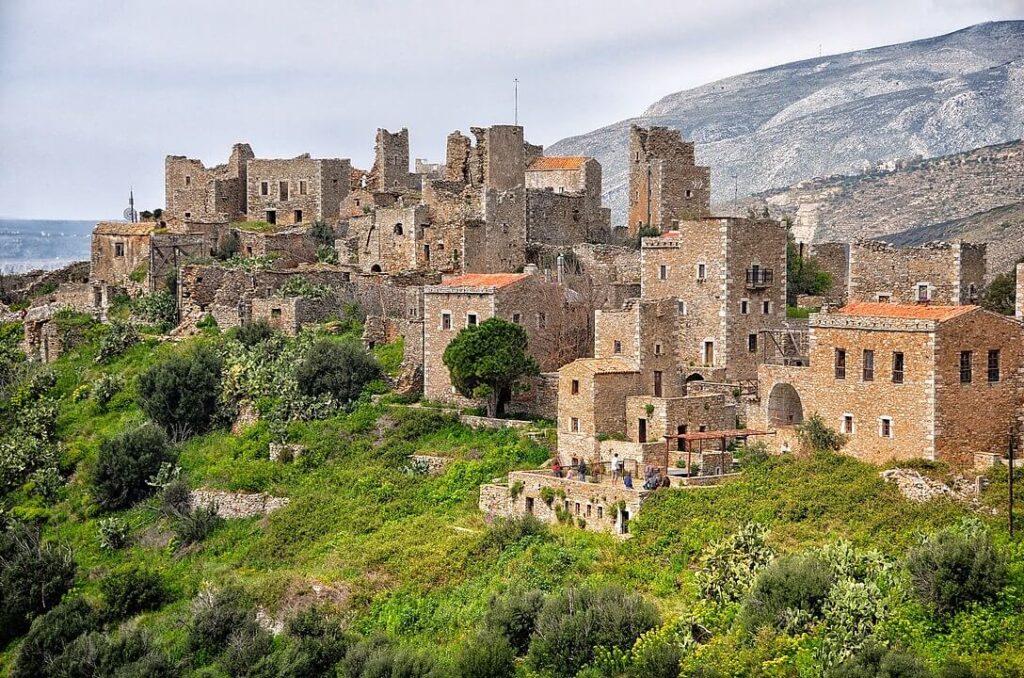
Messinian Mani: Opposite Kalamata lies Almiro, above it mount. Taigetos and next to it the sea, the Gulf of Messinia. Almiro is a small settlement by the sea with a clean pebbly beach and translucent waters. This is where the Messinian Mani begins. It’s like entering another country. The landscape is precipitous, plunging headlong towards the sea. Wooded slopes and rugged peaks. Brooks and torrents. Deep gorges and high ridges. Only by the sea is it peaceful. Mikri and Megali Mantinia, Avia, Ano and Kato Verga Akrogiali, Kitries are some of the villages. Sand and pebbles and little coves but also pine and fir woods and crystalline springs, solitary chapels and caves once the dwelling place of nymphs and lined with stalagmites. Hamlets hidden in the mountainsides and hamlets on the waters edge. Stone houses. Sitting rooms with fireplaces. Flower-filled courtyards. Cobbled lanes.
Byzantine churches and castles. Smudged frescoes and tall towers. As you penetrate further into this astonishing land, you want to get to the heart of it, to have fun with it, to fight for its sake. You breathe the perfumed breeze that wafts down from Taigetos or you forget yourself swimming alone in a delightful cove.
Then more towers and churches (Kardamili) and more wild gorges (Diros) and after a while Maniot towers yet again and charming fishing villages and another irresistable cove. On to shiny rocks and fabulous caves (Katalighi), more churches and belltowers (Thalames – Platsa) as you keep walking, a bit bewµldered by so much to contemplate but proud, and happy to be alive in such surroundings. What else can you say about this place, about this wealth.
Weather Information: Warm Mediterranean climate with mild winters. Warm, subtropical summers. Expect the dry, sunny days of a Mediterranean climate. In fact, in July it is not uncommon to find temperatures of more than 40 °C on some days. Hot days are often cooled by a system of seasonal breezes popularly called Meltemia. These “Meltemi” winds, blow from north to south usually starting around noon. In general, from June to August rainfall is rare. On average, the sun shines for 3,000 hours per year!